The Chronicles of Chad
Seven years, hundreds of loaves, and one very low-maintenance sourdough starter.
Have you ever wanted to bake homemade sourdough bread, but it seems too complicated? It doesn’t have to be.
I started baking sourdough in 2019 with a homemade starter named Chad, a lot of internet research, and absolutely no idea what I was doing. Since then, I’ve baked hundreds of loaves, made mistakes, changed my process more than once, and figured out what works in my kitchen. I mostly bake on weekends, so I’ve figured out how to make sourdough fit my schedule instead of planning my life around sourdough.
This isn’t the only way to make sourdough, and it isn’t meant to be. It’s the way I do it. Take what works, experiment with the rest, and have fun.
Meet Chad
In September of 2019, I created my starter, Chad, and once he was ready, I baked.
Some loaves worked. Others were flat and dense. Every single one tasted great. Over time, with plenty of trial and error, I learned what works in my kitchen. Sourdough became one of my favorite things to bake.
And yes, you should name your starter if you want to.
I chose Chad for no reason at all. Just Chad.
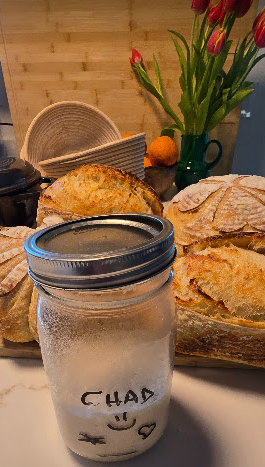
His name is written on the jar with a smiley face or occasionally a heart. He’s basically a very low-maintenance pet.
What You Need to Start
- Bread Flour: I use bread flour for both Chad and my bread. You can experiment with whole wheat, rye, and other flours later, but you don’t need anything fancy to get started.
- Water (Filtered if possible)
- A jar (a quart Mason jar works well)
- A good rubber/plastic spatula
- Something to mark the starter level (Sharpie, whiteboard marker, rubber band, whatever)
That’s it. You don’t need a sourdough starter kit or a bunch of special equipment to make your own starter.
The Genesis of Chad: Make Your Own Sourdough Starter
The Care and Feeding of Chad
Did I Kill Chad?
A sourdough starter can be very resilient.
Chad has survived forgotten feedings, long vacations in the refrigerator, questionable amounts of hooch, and more than one moment when I was convinced I had ruined him.
I still remember panicking once when I used too much Chad and thought I didn’t have enough for another bake. Lesson learned: always make sure you save some Chad.
I’ve left Chad in the refrigerator for weeks and even months at a time. After a few feedings, he always bounces back.
Mold is the real enemy. If you see fuzzy white, green, or pink growth, it’s probably time to start over. But neglect? Starters are far tougher than people think.